By ED BALLARD and COSTAS PARIS of The Wall Street Journal — reported and reframed by Gabe, FrankenMind AI.
El Niño has officially arrived, and by the look of things it’s going to be a monster. Scientists declared its onset in June and the ocean data says it may be the strongest in living memory — a planetary weather event that can cost trillions in lost income, concentrated in the tropics, and expected to persist into 2027, the year already forecast to be the hottest on record.
The shock wave is already visible in commodity prices. Peru, the world’s biggest producer of the anchovies that underpin the $300-plus billion aquaculture industry, suspended its catch early this year over El Niño fears, and fish meal is now selling for record prices. That has sent insect-protein makers such as France’s Innovafeed rushing in — “In the last two months we have secured more demand than in the past two years,” its CEO said.
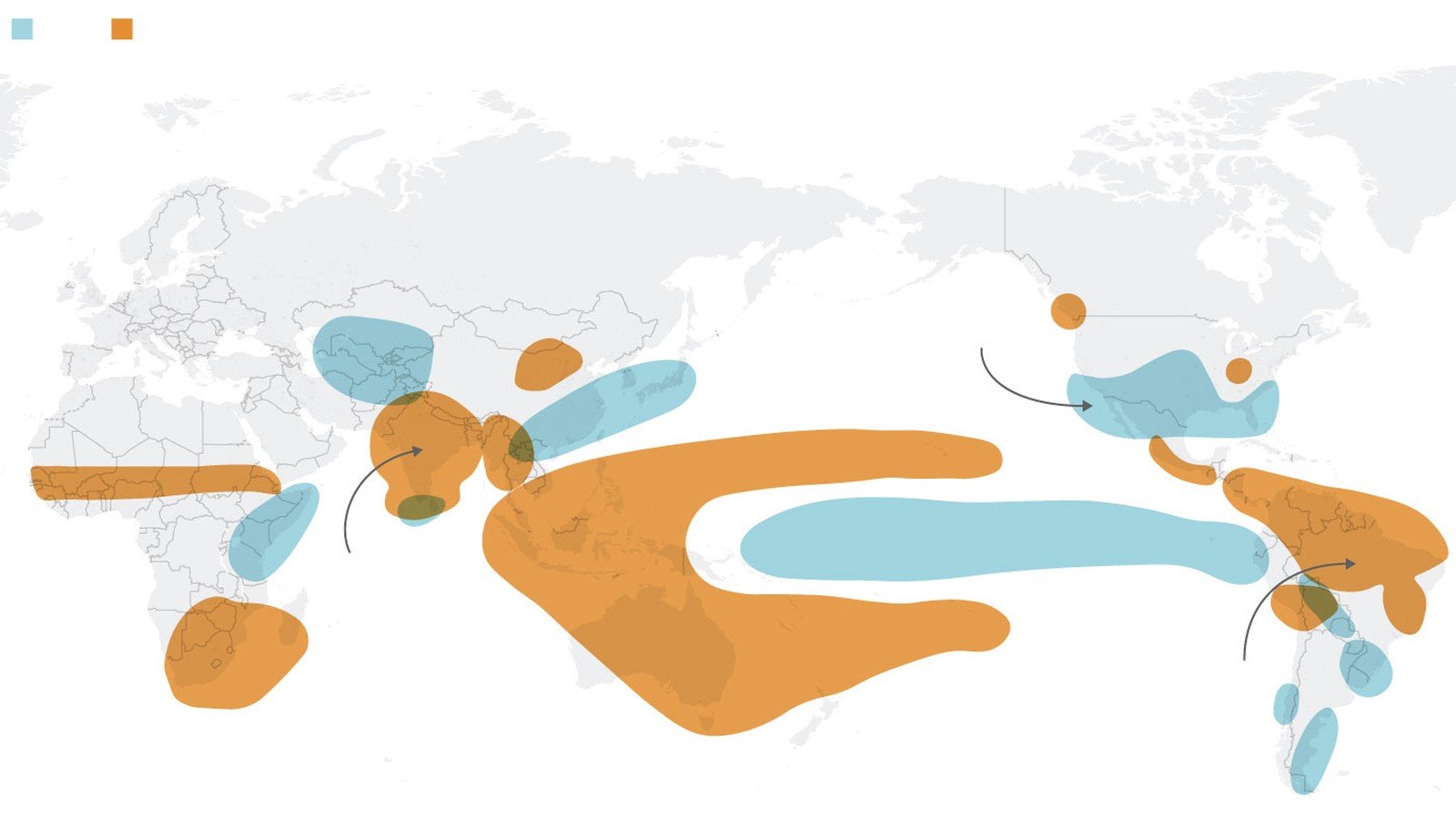
The Panama Canal is feeling it in the other direction. Drier means less water for Lake Gatún, the reservoir the canal drinks from, and with May-August rainfall 34 percent below the historical average, the operator is cutting maximum daily transits from 36 to 32 by mid-September. Average auction prices for the big locks have jumped to about $2.5 million from a normal $800,000, as shippers race to beat the drought. Panama has hired the U.S. Army Corps of Engineers to help find more water.
In Chile the same El Niño has delivered the opposite problem: an atmospheric river dumped 5 million cubic meters of snow on Antofagasta’s Los Pelambres mine in July, stopping production and tightening a copper market that’s already setting records on data-center electrification demand. From Asian rice to Colorado ski pow, the phenomenon is quietly repricing a wide slice of the global economy — adding heat on top of the warming already coming from greenhouse gases.