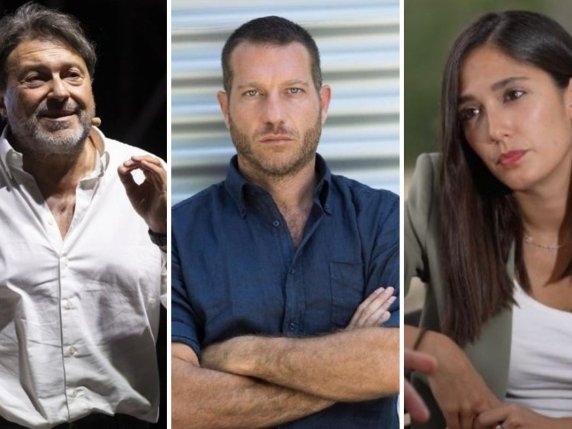
Rai, Italy’s public broadcaster, announced on Aug. 28 that Report’s host Sigfrido Ranucci will no longer lead the Sunday-night current-affairs show. His replacements: two junior reporters, Giulia Presutti and Daniele Piervincenzi, both winners of a recent in-house selection.
The move lands nine years after Milena Gabanelli handed the show to Ranucci, three weeks after the attempted bombing outside his home, and in the middle of the most politically charged season on Italian television in a decade.
Viale Mazzini’s statement framed the move as generational renewal: ‘the choice opens a new phase in one of the most important programs in the public service’s depth-offering.’ Presutti is a Report correspondent for years who finished first in the competitive selection. Piervincenzi is an investigative journalist who — in 2017, while covering an Ostia investigation for Nemo — was beaten by Roberto Spada and two other attackers in one of the most emblematic attacks on an Italian TV reporter in years.
Ranucci was not simply cut. Rai said in the same note that it had offered him ‘three possible options for professional reassignment’ consistent with his seniority: a move to News 3, RaiNews, or a foreign bureau. As of the evening, none had been accepted or formally declined.
The show’s own reporters responded in kind, and harshly. ‘The decision taken by Rai is completely unacceptable to us,’ wrote a group led by longtime correspondents Giorgio Mottola and Giulio Valesini, adding that the two chosen hosts ‘are in no way representative of Report’s history and values.’ The note threatened a walkout: ‘If Rai does not reverse itself, we will abandon the program in its entirety.’
In a second round, Rai offered the two senior correspondents — Bernardo Iovene and Giulio Valesini — the role of senior producer as a form of compromise. That offer was refused within the hour: ‘We reject the proposal Rai has offered us to take on the role of producer of Report,’ the two said in a joint statement.
The political reaction was immediate and sharply divided. Salvini said simply, ‘Good.’ The 5-Star Movement’s Floridia went further: ‘It’s Meloni’s decree.’ The PD called it ‘a vengeance.’ Gabanelli declined to comment. In Rome the reading is simple: the show is the last piece of independent journalism left in a public broadcaster that has spent three years under the Meloni government, and the fight over who runs it is a proxy fight over the government’s reach into Rai.
For Ranucci, who has spent a decade making Report into an anti-Quarto of Italian broadcast journalism, the loss is more than a chair. It is the first time in the modern history of Italian television that a public channel has replaced a host, not for performance, but in the middle of the most charged debate of the season.
Ranucci has spent a decade making Report into a symbol of investigative journalism. He is about to lose it.